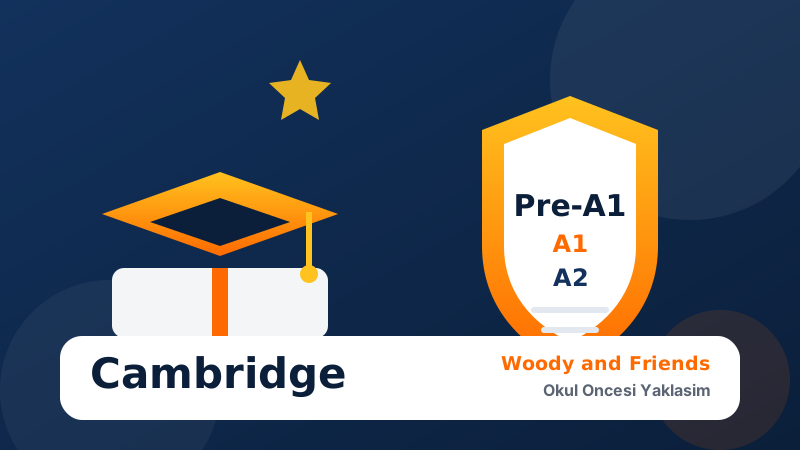
The Cambridge Education System is one of the concepts families most often come across when researching preschool English education. But what exactly does the Cambridge Education System mean for your child in the preschool years? In this updated 2026 guide, we explain the Cambridge approach in plain language — its difference in preschool, how it is applied in the classroom, and how Woody and Friends brings it to life for children in the 3-6 age range.
What Is the Cambridge Education System?
The Cambridge Education System is an internationally recognized approach to English teaching and assessment developed by the examination and curriculum bodies affiliated with the University of Cambridge in England. Instead of memorization, it prioritizes comprehension, communication, and real-world use. Its aim is not for the child to "know" the language, but to be able to use it. The system progresses gradually through levels, and at each level it develops the four core skills: listening, speaking, reading, and writing. In preschool, the emphasis is on listening and speaking, as is appropriate for the age.
The Difference of the Cambridge Approach in Preschool
The traditional approach often relies on memorizing words and patterns. The Cambridge Education System, however, brings the following differences in preschool:
- Communication-focused: The child learns a word not on its own, but within a situation (greeting, requesting, showing).
- Skill-based progress: What is measured is not "how many words they know," but "what they can do."
- Context and repetition: Language is reinforced in a natural flow through stories, songs, and games.
- Emphasis on confidence: Instead of pressure over right/wrong, the priority is to encourage trying and speaking.
This approach makes the child's first experience with English positive — and this positive feeling, formed at an early age, is the strongest foundation for the years to come.
Cambridge Preschool Levels
Cambridge offers a gradual roadmap for young learners. The basic steps for preschool and the start of primary school are as follows:
- Pre-A1 (Starters): First encounter — basic words, short instructions, listening.
- A1 (Movers): Simple sentences, everyday topics, short dialogues.
- A2 (Flyers): More fluent speaking and comprehension.
Preschool children are generally prepared for the Pre-A1 (Starters) level; the aim is not the exam, but a solid and enjoyable start. Each level assumes the gains of the one before it, so laying a firm foundation directly determines the fluency of the years ahead.
How Is the Cambridge Approach Applied in the Classroom?
In classroom practice, the teacher builds each unit around a real-life theme and distributes the four skills in age-appropriate proportions. In preschool, a lesson typically flows like this: a short warm-up song, an introduction to the theme with picture cards, a TPR (response through movement) game, a short story, and finally a small progress check. The teacher measures progress by observing whether the child can "point out" the words; this is an observation-based assessment, completely different from a rote exam. This model of practice is the most concrete example of carrying Cambridge's skill-based logic into the preschool classroom. Lessons are kept short (usually 20–30 minutes), because attention span is limited at this age; learning deepens not with duration but with the frequency and quality of repetition. The teacher also gives each child room to progress at their own pace and prioritizes individual gains over comparison.
How Does Woody and Friends Apply the Cambridge Approach?
Woody and Friends designs its preschool English set with Cambridge's communication- and skill-based logic:
- Each unit is built around a real-life theme (family, animals, colors…).
- Language is presented in context through lovable characters and stories.
- Digital content and games turn listening-speaking repetition into fun.
- The content prepares the child for the Pre-A1 (Starters) level in a natural flow.
This way, the child acquires a foundation aligned with international standards through play and without pressure. Because the theme the teacher covers in class can be repeated at home with the same content, the gains are reinforced in both settings.
What It Gives Families
A Cambridge-based preschool English program gives families:
- An internationally recognized, consistent learning framework,
- Clear skill steps by which they can track their child's progress,
- Solid preparation for primary school and later Cambridge exams,
- A play-based structure that is sustainable at home too.
This framework lets a family clearly answer the question, "What is my child learning and where are they heading?" — the very transparency that is so often missing in preschool education.
Frequently Asked Questions (FAQ)
Is the Cambridge system suitable for preschool?
Yes. Cambridge offers age-appropriate levels for young learners (Pre-A1 Starters); in preschool the emphasis is on listening and speaking.
Will my child take an exam?
The aim in preschool is not the exam. The Cambridge approach provides a solid start that can also form a basis for exams later on if desired.
What is the main difference between Cambridge and other methods?
Communication and real-world use come before memorization; what is measured is not "how much they know" but "what they can do."
How can I support at home?
You don't need to know English; singing the songs together, using the characters' names, and regular repetition provide the greatest support.
How is classroom assessment carried out?
The teacher measures by observing whether the child can show and use the words and patterns; this is an achievement-based assessment, not a rote exam.
Woody and Friends brings the Cambridge Education System approach together with stories, games, and digital content for preschool children. For more, take a look at our Preschool page, our Woody Academy page, and our store.